2011年9月13日星期二

Brief  of the Final Design Project (Part 5)
The design objectives, purpose and the reasons

The main Proposition

Hobby clubs
Hobbies are practiced for interest and enjoyment, rather than financial reward. Examples include science fiction clubs, ham radio, Model Railroading, collecting, creative and artistic pursuits, making, tinkering, sports and adult education. Engaging in a hobby can lead to acquiring substantial skill, knowledge, and experience. However, personal fulfilment is the aim.


Social activities clubs
Social activities clubs are a modern combination of several other types of clubs and reflect today’s more eclectic and varied society. These clubs are centered around the activities available to the club members in the city or area in which the club is located. Because the purpose of these clubs is split between general social interaction and taking part in the events themselves, clubs tend to have more single members than married ones; some clubs restrict their membership to one of the other, and some are for gays and lesbians.

Membership can be limited or open to the general public, as can the events. Most clubs have a limited membership based upon specific criteria, and limit the events to members to increase the security of the members, thus creating an increased sense of cameradery and belonging. Social activities clubs can be for profit or not for profit, and some are a mix of the two (a for-profit club with a non-profit charitable arm, for instance). The Inter-Varsity Club (IVC) is the biggest British non-profit club.

Social clubs
Some social clubs are organized around competitive games, such as chess and bridge. Other clubs are designed to encourage membership of certain social classes. In the 1940s, 1950s and 1960s social clubs were the precursor name of gangs like the infamous Hamburgs of Chicago. Latino immigrant adult and youth groups organized themselves as social clubs like: Black Eagles, Flaming Arrows, Paragons and Young Lords. Those made up of the elite are best known as gentlemen's clubs (not to be confused with strip clubs) and country clubs (though these also have an athletic function, see below). Less elitist, but still in some cases exclusive, are working men's clubs. Clubs restricted to either officers or enlisted men exist on military bases.


The modern gentlemen's club, sometimes proprietary, i.e. owned by an individual or private syndicate, but more frequently owned by the members who delegate to a committee the management of its affairs, first reached its highest development in London, where the district of St. James's has long been known as "Clubland". Current London clubs include Soho's Groucho Club, which opened in 1985 as "the antidote to the traditional club." In this spirit, the club was named for Groucho Marx because of his famous remark that he would not wish to join any club that would have him as a member.


According to the definitions of different clubs as above as the Hobby club, the Social Club, and the Social Activities Club, I decide to launch a Collecting Tattoos Hobby Social Activities Club which is focus on the theme of Horiyoshi Ⅲ’s artistic spirit and his art works. The Zen base spirit is the central mind in Horiyoshi Ⅲ’s arts and designs. In details, it inspires people to reconsider the loyalty, dutifulness, egolessness as the important characters in human nature. Therefore, to spread out such a spirit and unite the people who is interested in and loves the Horiyoshi genre tattoos would be the Club’s main proposition.

reference from http://www.wikipedia.org/

The overall goal and communicated objects

The overall goal of the design project is that representing the Horiyoshi genre and its artistic aspiring in every details within the Club. It is trying to communicate the highest Japanese tattoo art crafts and the traditional Japanese culture to the western society. Because there is not much people know about Japanese tattoo and the deep meaning about it in the western society. Even the one who loves the style, in many cases, he does not know about the traditional cultural meaning or story details behind the works. Therefore, setting up a club is not only for letting people who likes the Horiyoshi Ⅲ’s work joining together, and also spread out the spirit and his artistic aspiring to the public in the West.


The service and related business

In order to achieve the purpose, the Club will try to gain members as many as it can but still be strict with the interests in Horiyoshi gener tattoos. For the reason that such a Club would be a completely reinvent for the Horiyoshi family and also for the Western Society, it will be a tough adventure, but with a big ambition. However, we can find a lightening future within it, such as in its popular related business line in Clothing and Accessory, the collection sale and the Publications.   

The Differ from competitors

As the research going on, I find that there are so many tattoo clubs or parties existed in United Kingdom. Mostly, their main business is tattooing for customers as they join as members. However, the Club I prefer to launch is totally different from them. As it is mentioned before, the Club will not focus on tattooing on members, but let them communicate with each others about the tattoos they got or like, as the background history stories and spirits, or the traditional Japanese Culture they learnt. To be specifici, the activities will be the beer party with telling the story of the Japanese tattoo characters, visiting the London Tattoo Convention every year, or gathering for the collective photography exhibition. Hence, it is not a Club tend to be profitable, but a happy spot for the people who loves Japanese tattoo in London, even in UK or Europe. Of course, if there is a need, the Club will organize the contribution for any disaster country or person at anytime.


Partly Conclusion

To partly conclude, for the background study so far, I learnt a lot about the Horiyoshi III and his genre’s tattoo style and aesthetic spirits. The research recognizes that there is a deep meaningful artistic aspiring inside Horiyoshi Ⅲ’s arts and it is a really wealthy world to the Japanese traditional tattoos realm.

In practicality, Horiyoshi family already extends its art works into comercial industry and the market. At the same time, it keeps its own history for holding and spreading out the Zen spirit of their art works in the family running Museum. The living legent is not only a speech but works in reality. Furthermore, Horiyoshi III’s influence has extended to the West by his only european student Alex Reinke. He and his genre has been known to the West. Therefore, it is a good idea to launch a fans club for Horiyoshi family in the West. The first reason is that the fans club can be a good place for the fans of Japanese tattoos and Horiyoshi family hang out. The second, there is already a demand for uniting the fans to communicate each others. Finally, I believe, following Horiyoshi’s steps, the club I planed to launch has a predicable bright future and a good perspective. Baside on the Zen base spirit, and developing within the free mind environment of London, the club will have a chance to rise up and spread out widely.


The related publications

Brief  of the Final Design Project (Part 4)
About the Horiyoshi III Tattoo Museum


It is said, the Ink-freaks from around the globe dream of making a pilgrimage to this place. Its musty little two-floor treasure trove of pictures and paraphernalia, owned by the internationally-renowned tattoo master Horiyoshi Ⅲ. And the third floor becomes to a private studio for Horiyoshi III’s son and student Souriou Kazuyoshi-san tattooing nowadays.


His wife, Mayumi Nakano, is the general manager of this public "Tattoo Museum" located close to the Yokohama Station, which he founded in 2000. Mayumi Nakano, who appears to prefer to a spot of skin-art herself – never doubts courtesy of her expert husband’s ink-gun.


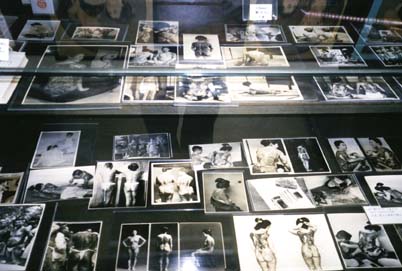
On show are photos and illustrations of intricate tattoos and an array of skin-art souvenirs, running the gamut from British and American tattoo-shop stencils to traditional tools used by Maoris and African tribes.

Described by visitors, “there’s an aesthetic consistency to the place: the entire museum seems to be a shrine to its proprietor’s various dark obsessions. Shrunken heads, Spawn toys, a giant stuffed tiger and a signed photo of a tattooed Robert De Niro in Cape Fear all vie for space...”


related artical: http://www.seekjapan.jp/article/jz/856/Yokohama+Tattoo+Museum

Brief for the Final Design Project (part 3)


About Horiyoshi the Third-Clothing & Accessories Company


As we said before, the company is mainly entrepreneur by Horiyoshi III’s student Steve Suk-san. It’s named Horiyoshi Worldwide Inc. It designs, manufactures, and markets using the images and spirits from Horiyoshi the Third (HIII)’s works, and a high end clothing and accessories product line based on the artistry of word renowned Japanese Tattoo Artist, Yoshihito Nakano (Horiyoshi III).


Said in its formal website, “The Horiyoshi the Third collection transforms the unique vision and unequivocal precision of this revered tattoo artist and the richness of the Japanese tattoo tradition into an imitable brand experience.”

HⅢ achieves the perfect balance between artistic expression and elite fashion offering to consumers: casual wear for men, casual wear for women, and unisex accessories. Furthermore, it is rapidly expanding its business with further lines currently being sold in specialty retailers and better department stores around the World. There are fourteen stores in Europe including London, Milano, and Paris. And eighteen stores has been addressed in North American, including Chicago, Vancouver, and Mexico. The brand is even spread out to Dubai and Australia.


HⅢ has been featured by the leading fashion publications such as The International Herald Tribune, The Los Angeles Times, Anotherman Magazine, Vogue and Style.com. The debut Fall/Winter 2010 Collection was noted in the New York Times as, “A great new line based on a living legend”


The Company is expanding product categories in Denim and selective license or cross-license agreements to third party producers in “Bridge” and “Complimentary” categories such as: undergarments, leather goods, footwear, active and general lifestyle products. All licensing arrangements will be pre-conditioned on appropriate minimum sales commitments, the Company’s ability to preserve the design and quality of the products manufactured, and the Company’s ability to control the manner in which such products are advertised, marketed, and distributed.

They say, “We offer consumers and fans, unique and well-made products that serve to celebrate the Art of Horiyoshi III and the ancient Japanese art form of Irezumi while creating a profitable brand name.”

Steve Suk spotted a gap in the market for refined clothing that appealed to both the tattoo subculture and the fashion world, and teamed-up with his ink guru to present the first Horiyoshi the Third collection in March 2009. This high-end streetwear—shot here by Johnnie Shand Kydd—comprises Japan-manufactured T-shirts, cashmere cardigans, slinky knot-front blouses, tunic dresses and generous scarves made with the finest yarn imported from Italy. Every piece is decorated with seasonal motifs, such as a tiger among maple leaves for fall or cherry blossoms for spring. The line also features expertly detailed, chunky jewelry in silver and gold, incorporating tattoo motifs like skulls and dragons.


related link:http://horiyoshi-thethird.com/
Brief  of the Final Design Project (Part 2)


About Horiyoshi the Third


Skin Deep: Horiyoshi III

Johnnie Shand Kydd Visits the Tattoo Sensei's Studio in Yokohama


Serpents twist over the shoulder amidst a cacophony of peonies and cherry blossoms; dragons breathe fire across a pectoral muscle; a tiger creeps over an elbow. The designs of Horiyoshi III, Japan’s undisputed tattoo master, come to life with every twitch and shudder of the skin. Born Yoshihito Nakano in 1946, Horiyoshi III had his epiphany when confronted with a Yakuza (Japanese gangster) sporting a full body tattoo—or “suit”—at a public bathhouse as a young boy. Inspired, he visited the studio of his later master, Horiyoshi I, for his own tattoo, and subsequently became his apprentice at the age of 25. Now based in the suburbs of port-city Yokohama, Horiyoshi works from a secluded, quiet atelier, crammed with skulls, Japanese Noh theater masks and even a dragon-print umbrella from Vivienne Westwood. His status as the most respected tattoo artist in Japan is confirmed by his adoption of his master’s honorific title, which he aims to pass down to his son, Kazuyoshi Nakano. “It’s important to remember that ‘Hori’ means ‘to carve,’” says photographer Johnnie Shand Kydd, who made today’s film about the living legend for NOWNESS. “They are called skin carvers [because the process involves] sharpened bamboo being pushed again and again into the skin, creating gradations like you would in a brush stroke on a painting.” Because of the underworld associations with tattoos in Japan—tattooing was outlawed in 1868 by the Meiji emperor, who saw the practice as barbaric—the designs stop sharply at the wrist and ankle; often a gap is left down the middle of the torso so that clients are able to entirely cover their bodywork, even when wearing a traditional kimono. Horiyoshi for the most part draws the tattoos freehand on the body, using an electric needle for the outlines and traditional bamboo tools for filling in color. “That’s where he shows himself as a great artist,” says Shand Kydd. “Acting on impulse and creating harmony where there wasn’t beforehand.” Horiyoshi considers each symbolic figure, dragon or floral motif as a component of one great masterpiece—for which clients will pay tens of thousands of dollars, making weekly, hour-long visits over the course of several years to obtain an indelible, corporeal artwork.


reproduced from http://www.nowness.com/day/2010/7/13/johnnie-shand-kydd-visits-horiyoshi-iii

Brief  of the Final Design Project (Part 1)


Background Introduction

“Using thought to analyze reality is illusion;
If preoccupied with victory or defeat all will be lost.
The secret of Irezumi? (Irezumi-Japanese full-body tattoo)
Lightning slashes the spring wind!”
                                                                       
              -Written by Alex Reinke


According to the formal website, it is said, the Horiyoshi the third family is dedicated to keeping the traditional Japanese Zen based spirit of kokoro -a simple translation would be heart or mind and in the emotional sense spirit, courage, affection and inner meaning- alive. This kokoro spirit is to be found in every aspect of traditional Japanese craftsmanship, martial arts, society and culture. An understanding of the Zen philosophy is of great importance for the japanese traditional Irezumi trainee and master likewise. In fact it can be extremely beneficial for everybody, the Japanese public is well aware of that and includes it into everyday life since its existence. In other words, without a certain understanding of this matter one can hardly walk the path of an apprentice from beginning to end, or be able to create truly authentic traditional japanese arts and crafts including Irezumi. Even just a slight understanding of the Zen-spirit can nurture the capability of loyalty, dutifulness, egolessness that enables you to serve in any situation and put yourself and your interests aside for the benefit of others. It especially brings to light an unmovable compassion for one self and others and the ability to keep these virtues alive throughout the journey as an apprentice and furthermore throughout life itself.


Talking about the Irezumi, it is written as follows: “For centuries the art of Irezumi is produced and developed before the Zen background, this unique craftsmanship is a pure form of traditional Japanese art and it is in complete harmony with the human body and soul. It underlines the individuality of its wearer and is of high precision and quality. With its historic figures and other traditional motives the Japanese tattoo is no trend phenomenon but a high class piece of art of stunning beauty. Its wearer becomes automatically part of an ancient Japanese tradition and helps to keep it alive."  


Following the spirit the family insisted, there are more information about Horiyoshi III can be found, Horiyoshi III (Yoshihito Nakano) has created a lot of masterpieces on human bodies. His works are well know to worldwide and have been displayed in many exhibition and published on books. “Horiyoshi III says that he feels pretty good these days and he is very active, concentrating on his artwork and new book publications. He launched, and will launch in the further future, a few new exhibitions on his art and exquisite private collection of Japanese tattoo art and prints, in selected museums and galleries worldwide. Some for pure charity reasons. In 2009 there was an exhibition on his artwork in the Vanilla Art Gallery in Ginza Tokyo. The in 2009 launched exclusive clothing line ‘Horiyoshi the third’ is in its successful sixth collection. It is brought by Steve Suk-san and his Stone Cooperation. The clothes and accessories can be purchased in selected boutiques in Paris, London, New York, Boston, Los Angeles, Tokyo and many more. However, Horiyoshi III-san is not taking any more new customers. His age and the circumstances that come with it, do not allow it. He is concentrating on finishing the tattoos he has already started. Horiyoshi III-san recommends his son and student, Souriou Kazuyoshi-san working in the Horiyoshi III Museum tattoo shop and the Noge shop in Yokohama. For European customers he recommends myself Horikitsune aka Alex Reinke.”


Introducing to Alex Reinke (Horikitsune aka), “he is the only European who was taken in as an apprentice of a traditional Japanese craftsmanship family by the world famous Irezumi artist Horiyoshi the third in Yokohama, Japan, today he is his senior apprentice. Horikitsune like his master only strictly does traditional Japanese Irezumi, by machine and on request or respectively where possible, by hand (Tebori). By 2010 Horikitsune will be active in this craft for 15 years. He was interested in Japanese culture, its arts and Zen since his early teens which helped tremendously throughout his journey. Furthermore Horikitsune has taken on an apprentice himself in September 2009. His name is Leon, he is of russian decent, extremely dedicated to the traditional Japanese way and the world of Irezumi. Being a Tattooer in London for some years already he should be able to get within reach of his Hori-name quicker than usual.”


The Horiyoshi III Family.
It is published as that, the Members are: Horiyoshi III-san, Mayumi-san, Souriou Kazuyoshi-san, Steve Suk-san and Horikitsune aka.


A given notes on the formal website says, since May 2011 Horikitsune ordained as a lay-monk of the rinzai-zen order and he took on the dharma name Hakugen.


Rinzai Zen Precepts :
Taking refuge in the Buddha
Taking refuge in the Dharma
Taking refuge in the Sangha


Ceasing from evil
Doing only good
Doing good for others


Refraining from:
1. Taking life
2. Stealing
3. Lying
4. Indulgence in abusive or inappropriate sexuality
5. Abuse of intoxicants.
6. Criticism of others.
7. Boasting of attainments and belittling others.
8. Being mean
9. Harbouring anger
10. Defaming one’s own or others’ teachers or spiritual paths.


These Precepts provide an ethical framework and in advanced training are studied as signifiers of the enlightened mind. The commitment of formally taking the Precepts is an important threshold in the life of a Zen student.

2011年5月4日星期三

Task 8: Sustainable Design

8.1 What are your opinions on sustainable design?


Sustainable design means that buildings, furniture and electrical products, act., should consider the environment first as a premise of design.
Sustainable Design becomes more and more important along with the development of humanity society. It is no longer a simple recycling and reuse,  but needs to consider the non-pollution pathway to environment during its working time, and at the same time, concern about whether it is able to return to nature at the end, even give a feedback to nature. This also is one of the important admissions that should be took in account during a modern designer is doing his job.

8.2 Ten Things I've Learned


Task 7: advertising

What do you consider to be the role of advertising?
1. Advertisements provide the most direct comprehensive and detailed information. We get to know about household goods from advertisements.
2. Advertising itself is a business that has provided a great number of jobs.
3. With advertisements, people save a lot of time in shopping, looking for jobs, etc.
4. Daily life needs advertisements because the main function of advertising is to disseminate information on commodities, services, culture, employment, student enrollment and even marriage.
5. A cheerful, witty advertisement makes such a difference to a drab wall or a newspaper full of news of calamities.
6. Without advertisements, newspapers, commercial radios and television companies could not survive.
7. You can find a job or rent an apartment, buy or sell a house, etc. by way of advertising.
8. Advertising is a process of artistic creation.
9. Advertising creates mass markets. Without advertisements, manufacturers may find it difficult to sell their products.
Discuss the ethics of advertising.
Advertising can be exaggerative, but can not be a lie.
Advertising is responsible for the change of people’s behavior and mind.
What do you consider to be good advertising and bad?
In my opinion,a good advertising needs good idea and good performance. Humour is always  a important element in a good advertising. People can remember these kind  of advertising easily.


Bad advertising can not arouse people’s interest or can not show the main idea  quickly and clearly.